
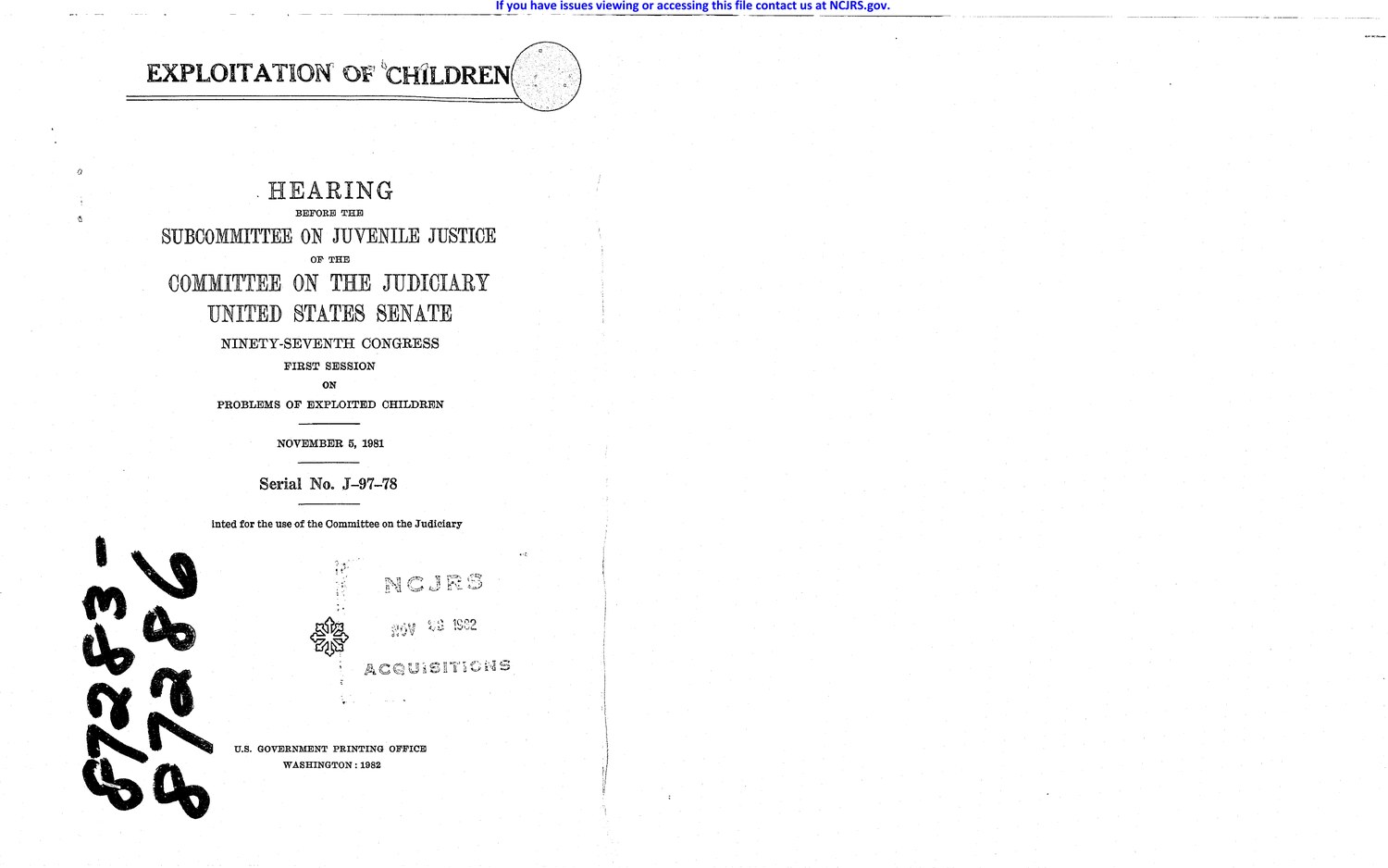
David was seventeen when he sat before a United States Senate subcommittee in November 1981 and gave the adults in front of him permission to use his first name. His surname remained private, although nearly everything else was entered into a public record. He told them that sexual and physical abuse had begun when he was seven, that he first ran away at twelve, and that his life afterward had moved through arrests and repeated placements. By the time he reached the hearing, he had been confined in nine or ten institutions. The printed record introduced him with a word that followed boys surviving through sex on the street. It called David a hustler before he had the chance to explain what had happened to him.
Once David began speaking, the word became harder to separate from the adults who had used him and the agencies that kept placing him. He described sleeping wherever somebody allowed him to stay, returning home, being arrested, and entering another institution. An adult witness told the senators that a hustler meant a boy prostitute, while David described a young man selling his body to older men for money. Adults had also told him that sexual contact with men meant he wanted men, although his understanding of that contact began with being abused by them. The hearing had been convened to examine the exploitation of children, yet the boy testifying had repeatedly encountered the government through delinquency proceedings and confinement.
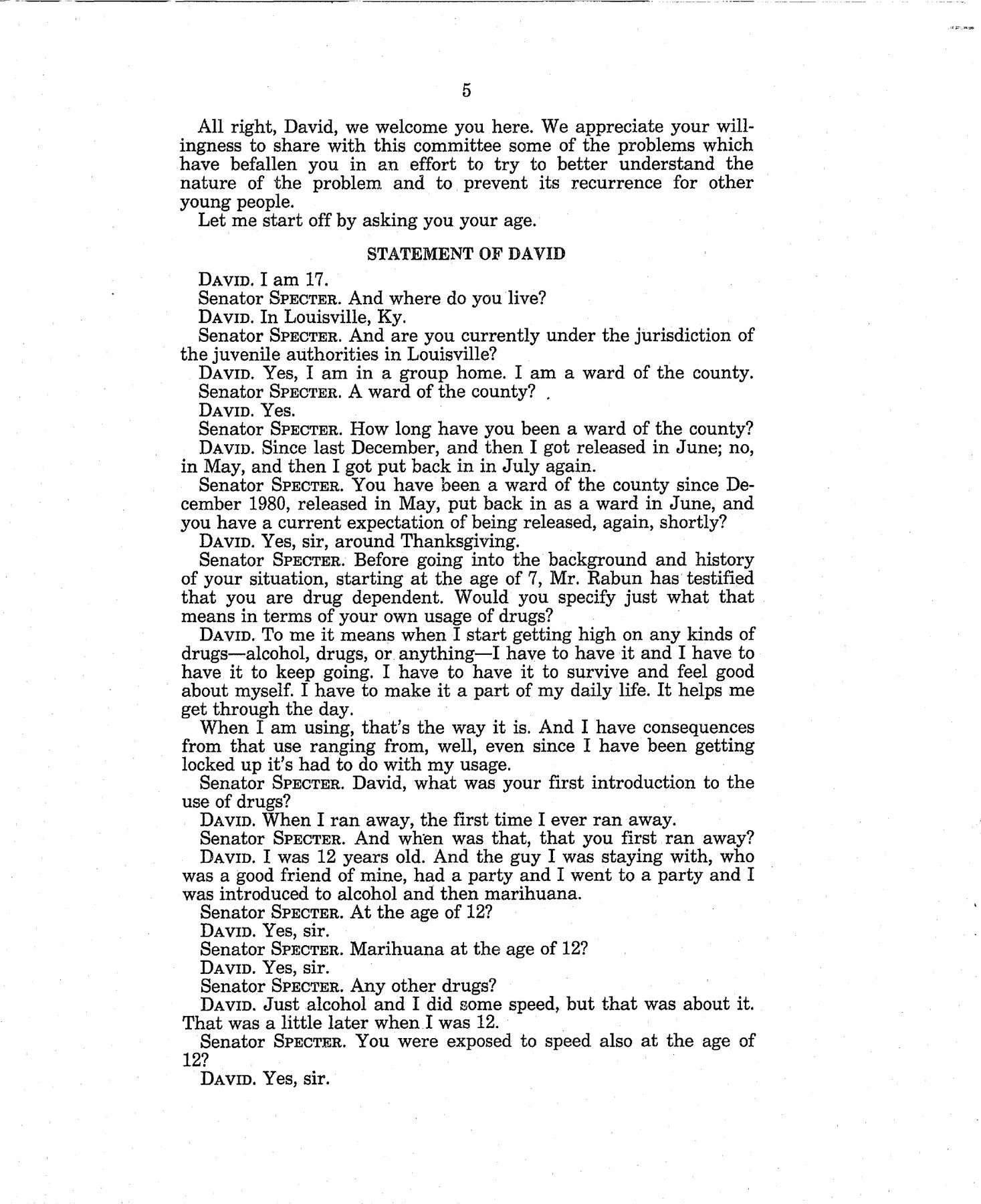
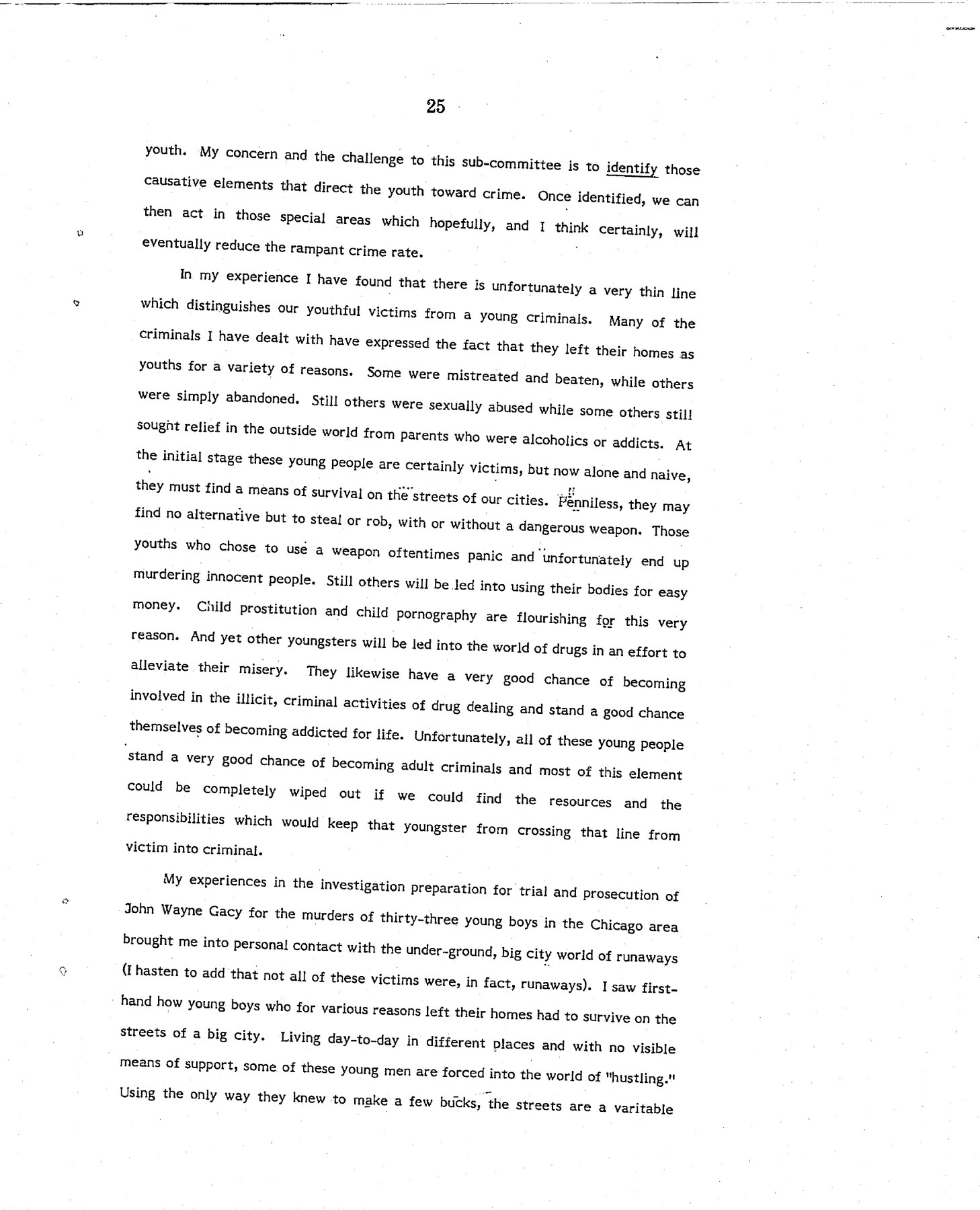
David told the senators that juvenile court officials seemed more concerned with finding somewhere to place him than understanding what he believed he needed. His testimony did not claim that every runaway boy received the same treatment, and the hearing did not produce a national count of boys with his history. It did show how quickly the conduct used to survive could become the conduct written at the top of a child’s file. Once the arrest or drug use became the immediate problem, the abuse that preceded it could move farther into the background. David remained the same boy throughout that process, even as each agency supplied a different reason for handling him. Terry Sullivan, the prosecutor who had handled the John Wayne Gacy case, followed the same movement through the records he brought to the hearing. He described young people fleeing violent or sexually abusive homes and surviving through conduct that exposed them to prosecution. Sullivan called the distance between victim and criminal a “very thin line” because officials often waited until a child could be arrested before responding. His warning described the point at which theft, drug use, or selling sex could replace the earlier abuse as the fact controlling the case. A system that met the child during an arrest could then punish the evidence of survival without returning to the reason the child was living that way.
Father Bruce Ritter told the subcommittee that roughly a thousand young people passed through Covenant House’s Times Square program each month, with boys making up about two-thirds of them. He described young people arriving from abusive homes and trying to find food or shelter while living around prostitution and pornography. Those figures belonged to one heavily used program and cannot be stretched into a national estimate. They still record what workers in Times Square were encountering while officials argued over how exploited children should be classified. Boys were reaching a service in large numbers, even though the public language surrounding them could make exploitation sound like an occupation they had chosen.
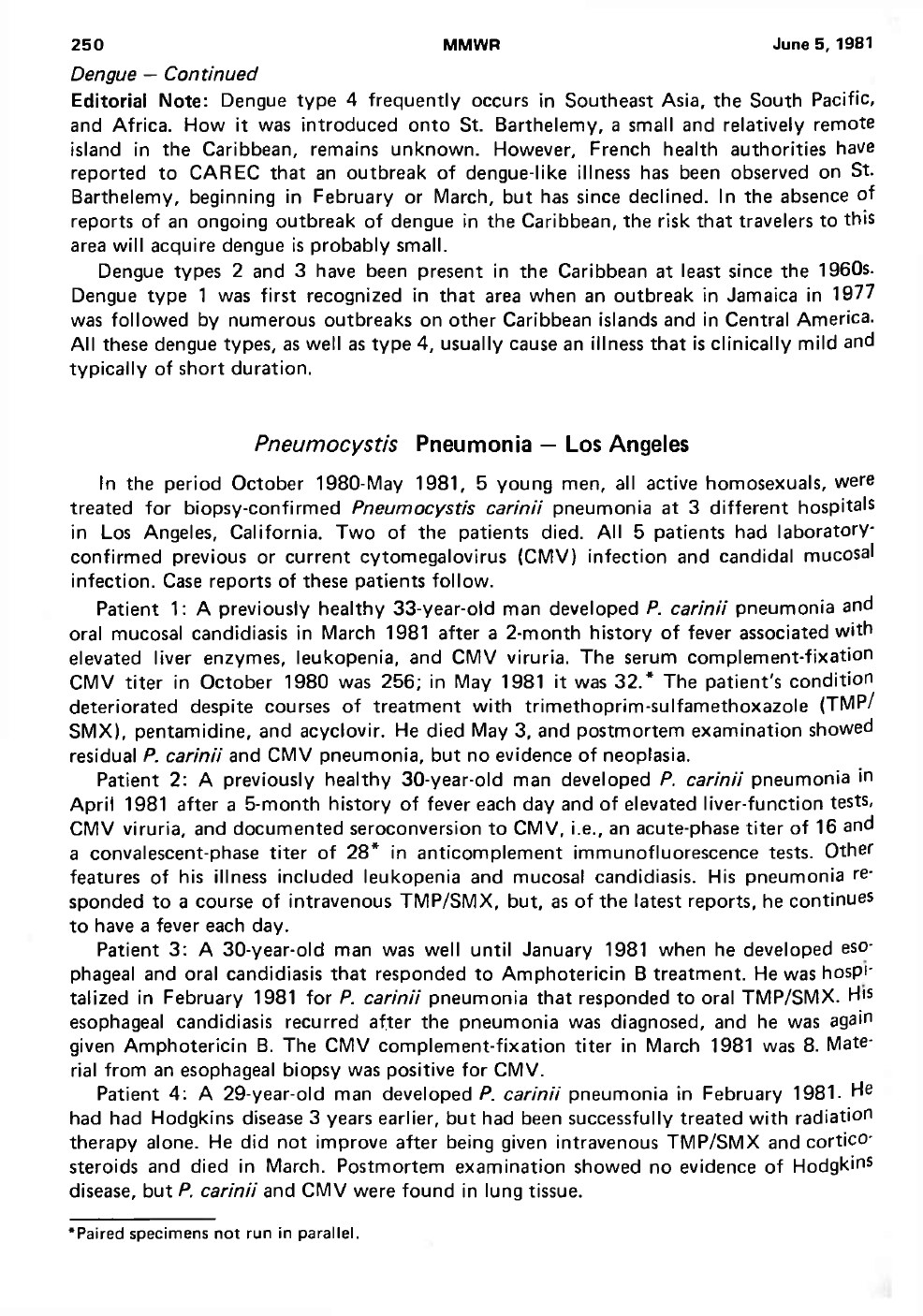
The year of David’s testimony had already shown gay men what contact with police could involve. On February 5, 1981, Toronto police raided four bathhouses during Operation Soap and arrested 286 men as found-ins, along with twenty owners or employees charged under bawdy-house laws. Accounts preserved by The ArQuives describe officers entering with crowbars and sledgehammers, lining men up, and recording their names. Thousands of people protested the following night after learning what had happened inside the bathhouses. These raids concerned vice enforcement rather than reports of sexual assault, and the men arrested there cannot be given a survivor identity they never claimed. Their treatment by police still formed part of the world in which a man assaulted by another man had to decide whether law enforcement could be trusted with the account. Another report published that June introduced a fear that would remain throughout the decade. The Centers for Disease Control described five young gay men in Los Angeles who had developed a rare pneumonia, and two of those men had already died. Nobody reading that first report could have known the scale of what was beginning. By July 1989, more than 100,000 AIDS cases and 59,000 deaths had been reported to the CDC, with gay and bisexual men comprising most of the reported cases. A male survivor disclosing sexual contact with another man could now encounter assumptions about disease alongside the existing judgments about homosexuality and masculinity. Medical fear entered conversations that were already failing to keep orientation separate from force and consent.
Congress and the courts were changing how some exploited children appeared in law during the same period. The Supreme Court decided New York versus Ferber in 1982, allowing states to prohibit the distribution of sexual performances involving children without proving that the material met the ordinary obscenity test. Congress passed the Missing Children Act during that year, and the National Center for Missing and Exploited Children opened in 1984 as a national clearinghouse. These developments made it easier for officials to describe children in sexual images and missing young people as victims requiring protection. They offered far less guidance when the child was already standing before a juvenile judge because of an arrest.
The limits of the available research became clear when federal reviewers tried to determine how many missing children were being sexually exploited. A 1988 review found that studies of runaways reported prostitution involvement ranging from 11 to 23 percent, with higher reported rates among girls. Its authors also estimated that roughly one quarter of the male and female juvenile prostitutes in the studies had participated in pornography production. The samples came from shelters, police contacts, interviews, and service programs that were reaching different groups of young people. They could describe the children encountered through those systems without establishing how many remained outside every available count. Boys appeared throughout the research, although the words applied to them still shifted between descriptions of victimization and descriptions of crime.
Doctors were finding boys in clinical records that earlier medical writing had often overlooked. A 1986 review from a San Diego children’s hospital examined 140 boys evaluated for sexual abuse between 1979 and early 1984. Other publications from the decade addressed father-son incest, adolescent male victimization, and the treatment of abused boys. These hospital and clinic samples could not establish the number of boys being abused outside medical settings. They did establish that boys were arriving for examination and that the physical findings were sometimes subtle. The lack of boys in older research was becoming harder to confuse with an absence of abused boys themselves. During that same year, the Supreme Court upheld Georgia’s sodomy law in Bowers versus Hardwick, leaving states free to criminalize consensual sexual conduct between adults inside a home. The case concerned consensual conduct, although its consequences reached the setting in which a man considered reporting rape by another man. Police practice differed among jurisdictions, and some officers or advocates were trying to improve how male victims were treated. A survivor still had reason to consider what the officer receiving his report believed about sex between men before describing an act that had been forced. The legal system demanded a distinction between consensual sex and assault while continuing to treat consensual sex itself as criminal.
Gillian Mezey and Michael King interviewed twenty-two male sexual-assault survivors for a British study published in 1989. The participants ranged from sixteen to eighty-two years old, and thirteen had told nobody immediately after the assault. Six had never disclosed before joining the study, while only two had reported what happened to police. Because the men volunteered for the research, their experiences cannot be used to estimate how often male sexual assault occurred. Their individual accounts still show what happened when particular survivors tried to obtain help. One gay man concealed his homosexuality after being challenged by police and in court, while a heterosexual man said a psychiatrist disbelieved him and urged him to accept a supposed homosexual side of himself.
Several participants described becoming immobile or unable to act during an assault, even as other people assumed that a man should have been able to stop it. The men feared being regarded as weak or homosexual, and some professionals interpreted the assault through sexuality before examining force. British law created another problem because it did not then recognize the rape of a man as a distinct offense. Forced and consensual acts between men could therefore fall under the same legal label when a survivor most needed those experiences separated. The confusion David described in 1981 had followed adult men into police stations, courtrooms, and clinical offices by the end of the decade. Finding somewhere to call remained uncertain because British rape-crisis services did not follow a single policy toward male survivors. Some lines accepted calls from men, while other centers served women because of their founding purpose and limited resources. Birmingham Rape Crisis spoke with a gay youth group about male rape in 1983, and London Rape Crisis sometimes directed male callers to London Friend. A gay survivor seeking that service might receive useful help through the referral. A heterosexual survivor could hear the same referral as another person deciding his orientation from the sex of the person who assaulted him. Access depended on which service answered and how the worker on that call understood male rape.
Martin Dockrell and Richie McMullen founded Survivors in London in 1986 after hearing from male survivors through Gay Switchboard and Streetwise. The organization later known as SurvivorsUK was operating a helpline by 1988, and its calls increased fivefold between January and December. Its origins gave the group experience with gay men who had been poorly served elsewhere, while its work extended across sexual orientations. Men who had expected disbelief were finding a telephone number created specifically for male survivors. The increase in calls also showed how quickly the need exceeded what a small volunteer organization could provide. Former residents were forcing institutional abuse into public view during these years as well. Three former staff members at Kincora Boys’ Home in Belfast were convicted in 1981 of sexual offenses against boys in their care. Hugh Quinn, who had lived at Kincora, spoke on BBC Northern Ireland in February 1982 about the fear surrounding the home and his expectation that nobody would believe him. Later inquiries examined failures inside the institution and disputed allegations involving state and intelligence bodies. Those disputes require their own account because compressing them here would turn the former residents into background for a political argument. For this history, the convictions and Quinn’s public testimony establish what boys from Kincora had already brought into view near the beginning of the decade.
In Newfoundland, Shane Earle carried another institutional history into public view near the decade’s end. Earle had entered Mount Cashel in 1973 when he was six years old, and police investigated allegations involving residents in 1975 without a public prosecution following at that time. On March 19, 1989, journalist Michael Harris reported Earle’s account of abuse at the boys’ home. Other former residents then came forward, the earlier police handling was reopened, and Newfoundland announced a public inquiry before the year ended. A later federal study recorded that thirty-two young men eventually testified while others declined, and it found few services prepared for what adult male survivors needed. Those later findings cannot be assigned to officials in 1989, although Earle’s public account had already shown what happened when a boy’s report was allowed to sit for years. The inquiry began after the child who entered Mount Cashel had become a man willing to make the old allegation public again.
Sources used in this article
- United States Senate Subcommittee on Juvenile Justice, Exploitation of Children, hearing held November 5, 1981, printed 1982.
- New York v. Ferber, 458 U.S. 747 (1982).
- Bowers v. Hardwick, 478 U.S. 186 (1986).
- G. T. Hotaling and David Finkelhor, Sexual Exploitation of Missing Children: A Research Review (1988).
- Lawrence F. Dunkle and John R. Spencer, “Sexual Abuse of Boys,” Pediatrics 78, no. 1 (1986), 133–138.
- Centers for Disease Control, “Pneumocystis Pneumonia — Los Angeles,” MMWR 30, no. 21 (June 5, 1981), 250–252.
- Centers for Disease Control, “First 100,000 Cases of Acquired Immunodeficiency Syndrome — United States,” MMWR 38, no. 32 (August 18, 1989), 561–563.
- Gillian C. Mezey and Michael B. King, “The Effects of Sexual Assault on Men: A Survey of 22 Victims,” Psychological Medicine 19 (1989), 205–209.
- The ArQuives, “Operation Soap” collection and oral histories.
- George J. Severs, “Male Rape: Survivors, Support and the Law in Late Twentieth-Century England and Wales,” History Workshop Journal 97 (2024), 174–198.
- Newfoundland and Labrador Heritage, “Mount Cashel Orphanage Abuse Scandal.”
- Canada, Department of the Solicitor General, Special Issues Related to Multi-Victim, Multi-Offender Child Sexual Abuse (1992).